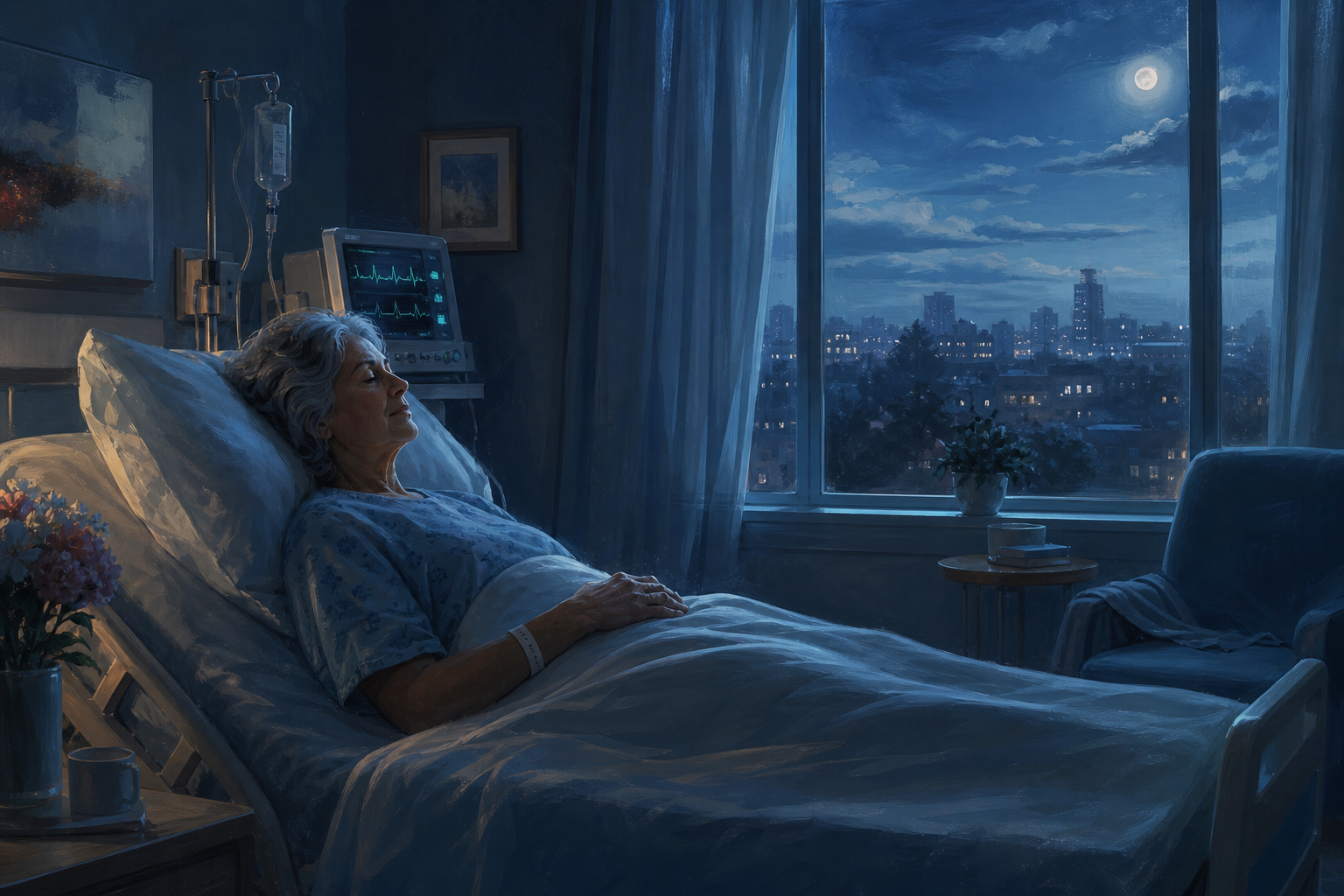

Depression dulls reward — sound does not always cut through
Major depression often involves anhedonia — muted pleasure from activities that once felt good. Salimpoor's neuroimaging showed dopamine release in anticipation and peak moments of favourite music, but not everyone experiences chills or reward equally.[3] Koelsch reviewed music-emotion networks spanning limbic and paralimbic regions — powerful when engaged, inaccessible when depression flattens response.[4]
Cochrane reviews of music therapy (structured, often therapist-led) suggest benefits for depressive symptoms compared with treatment as usual — but quality varies and passive playlists are weaker.[1][2] NICE depression guidance centres psychotherapy, medication, and activity scheduling; sound is not first-line care.[7]
Where ambient sound may still help
Rumination reduction: Gould van Praag linked naturalistic soundscapes to connectivity shifts away from rumination-heavy DMN patterns during listening.[5] Soft nature beds are not antidepressants, but they can lower the sensory chaos that feeds irritability.
Behavioural activation scaffold: scheduling a 10-minute morning garden session can be a tiny achievable activity — especially if paired with light exposure and movement, not replacing them.
Sleep hygiene adjacency: depression and insomnia reciprocate; gentle masking may reduce night spike awakenings for some — distinct from treating mood directly.[24]
Thoma measured lower stress biomarkers with preferred music after stressors — preference and agency matter.[6] Forced "happy" playlists can backfire when they feel like pressure to feel better.

Lyrics, nostalgia, and traps
Music tied to loss or past self can deepen sadness — Huron's expectation theory explains how familiar harmonic moves pull emotion fast.[8] Non-lyrical brown and rain beds often work better as environment than emotional narrative when mood is fragile.
Red flags — see clinicians first
Suicidal ideation, inability to function, psychotic features, or bipolar spectrum where sleep reduction triggers mania — sound apps are irrelevant until stabilised. Sound Bubbles is companion audio for people already receiving or recovering enough to experiment with sensory environment.

Behavioural activation and morning sound rituals
Depression shrinks behavioural repertoires. A tiny morning ritual — open one garden, sit with tea for eight minutes — can be a foothold without promising mood lift. Pair sound with light and movement when possible; Thoma's stress-recovery effects were measured in laboratory stress, not as standalone antidepressant replacement.[6] Track whether sound precedes action or replaces it — the latter is a warning sign.
Social anhedonia and shared listening
Depression often isolates — listening with a trusted person may recruit social reward Koelsch describes in music-emotion networks better than solo looping.[4] If solo beds help morning startup, note it; if they deepen withdrawal, pause.
Seasonal patterning and light-sound pairs
Depression with seasonal component may need light therapy and clinical care — morning garden plus outdoor light walk beats bed-only rituals. Aalbers' music-therapy Cochrane evidence is for structured sessions, not passive hope.[1] Track mood with PHQ-9 or clinician scales, not vibes alone.
Research snapshot and reading list
The numbered references at the end of this page anchor claims in peer-reviewed journals, Cochrane reviews, and institutional guidance — not influencer anecdotes. When a study is labelled "adjunct," it means sound supports comfort or attention alongside standard care; it does not replace diagnosis, medication, surgery protocols, or licensed therapy. Effect sizes in music-anxiety trials are often modest but clinically meaningful at scale — your individual response may be null, positive, or negative. Log outcomes honestly for two weeks before declaring a garden "works." Stop if symptoms worsen. Share this article's references with clinicians when discussing environmental accommodations; citations speed conversations about what evidence does and does not support.
Sound Bubbles tuning reference (worth learning once)
Master Volume sets the whole room. Start lower than you think — you can always raise one bubble instead of the entire garden.[20][21] Per-bubble Volume is how you balance layers without destroying dynamics: rain can stay audible while brown bed whispers.
Falloff is the secret weapon for speech and spike control. High falloff means only bubbles near the audible core sound "in your head"; everything else feels outside the window — exactly the intelligibility reduction office and sleep literature points toward.[15][25] If a layer feels too present, move it back before turning it up.
TimeLine adds slow environmental change so habituation does not turn your garden into wallpaper.[9][12] Pop anything that announces itself after ten minutes — a good garden should feel found, not performed.
Save & remix: when you find a mix that survives an hour, save it. Public medical and organism gardens are starting points; the best room is usually one you tuned for your desk, nursery, or bedside.
Why this supports Sound Bubbles — not just "any ambient app"
Most ambient apps deliver one file. The studies above rarely study "a loop." They study continuous floors against irregular noise, unintelligible speech against memory tasks, nature scenes against stress markers, spatial streams against glued mashups, and slow environmental change against habituation.[9][14][22][23][24]
Sound Bubbles maps onto those findings deliberately: brown/noise beds for masking floors, nature and library layers for restorative structure, distance/Falloff for speech intelligibility control, and TimeLine motion so the garden keeps the statistics of a place instead of the statistics of a four-minute loop.[12][15][16][25] That is the practical reason the product feels different after the first hour — and the scientific reason the difference matters.
How to apply this inside Sound Bubbles
- Open a related garden (or New Garden) and press Start playing so audio unlocks.[9]
- Expand Shape your soundscape → Sounds: set Master Volume, then Falloff while watching the audible-core guide.[10]
- Select a bubble; drag and scroll depth. Prefer raising one bubble's Volume over blasting the whole room.[11]
- Add library rain, nature, or noise layers; keep speech-like content distant — or remove it — when you need reading or coding focus.[12]
- TimeLine: choose Drift, Tide, or Orbit when you want the garden to keep evolving without grabbing attention.[13]
- Brown Noise tab: shape a warm floor, optionally Release as bubble so it becomes spatial.[14]
- Save gardens that still feel kind after an hour — public gardens should stay soft, not startling.[15]
Limits, safety, and honest uncertainty
We do not claim Sound Bubbles replaces clinical care, licensed therapy, or medical protocols.[16][17] What the product does offer is a listening architecture that matches how hearing and attention actually work: layered sources, spatial distance, and slow change instead of one brittle loop.[18][19]
If sound worsens symptoms, stop. If you need medical advice, see a clinician. If you want a softer room, open a garden, place the bubbles kindly, and stay honest about what sound can — and cannot — do.[20][21]
How this article was researched
We combine first-hand experience placing and tuning Sound Bubbles gardens with citations from peer-reviewed journals, reviews, and institutional pages (including NIH/NCBI, sleep and hearing literature, acoustics, and attention research). Where evidence is mixed or early, we say so. On wellbeing topics we stay cautious: these are companion soundscapes, not cures.
References
Sources cited in this article. Prefer primary literature and institutional guidance; Sound Bubbles is not a medical device and these citations do not imply clinical endorsement.
- (2017). Music therapy for depression. Cochrane Database.
- (2008). Music therapy for depression. Cochrane Database.
- (2011). Anatomically distinct dopamine release during anticipation and experience of peak emotion to music. Nature Neuroscience. doi:10.1038/nn.2726
- (2014). Brain correlates of music-evoked emotions. Nature Reviews Neuroscience. doi:10.1038/nrn3666
- (2017). Mind-wandering and DMN with naturalistic sound. Scientific Reports. doi:10.1038/srep45273
- (2013). Music and the human stress response. PLOS ONE.
- (2022). Depression in adults: treatment and management. NICE guideline NG222.
- (2006). Sweet Anticipation. MIT Press.
- (2009). Habituation revisited: an updated and revised description. Neurobiology of Learning and Memory. doi:10.1016/j.nlm.2008.09.015
- (2009). Habituation: a history. Neurobiology of Learning and Memory.
- (1990). Auditory Scene Analysis. MIT Press.
- (2010). The free-energy principle: a unified brain theory?. Nature Reviews Neuroscience. doi:10.1038/nrn2787
- (2010). Stress recovery during exposure to nature sound and environmental noise. IJERPH. doi:10.3390/ijerph7031036
- (2021). World report on hearing. WHO.
- (2021). World report on hearing. WHO.
- (2021). World report on hearing. WHO.
- (2021). World report on hearing. WHO.
- (2021). World report on hearing. WHO.
- (2021). World report on hearing. WHO.
- (2021). World report on hearing. WHO.
- (2021). World report on hearing. WHO.
- (2021). World report on hearing. WHO.
- (2021). World report on hearing. WHO.
- (2021). World report on hearing. WHO.
- (2021). World report on hearing. WHO.