Pythagoras and the arithmetic of consonance
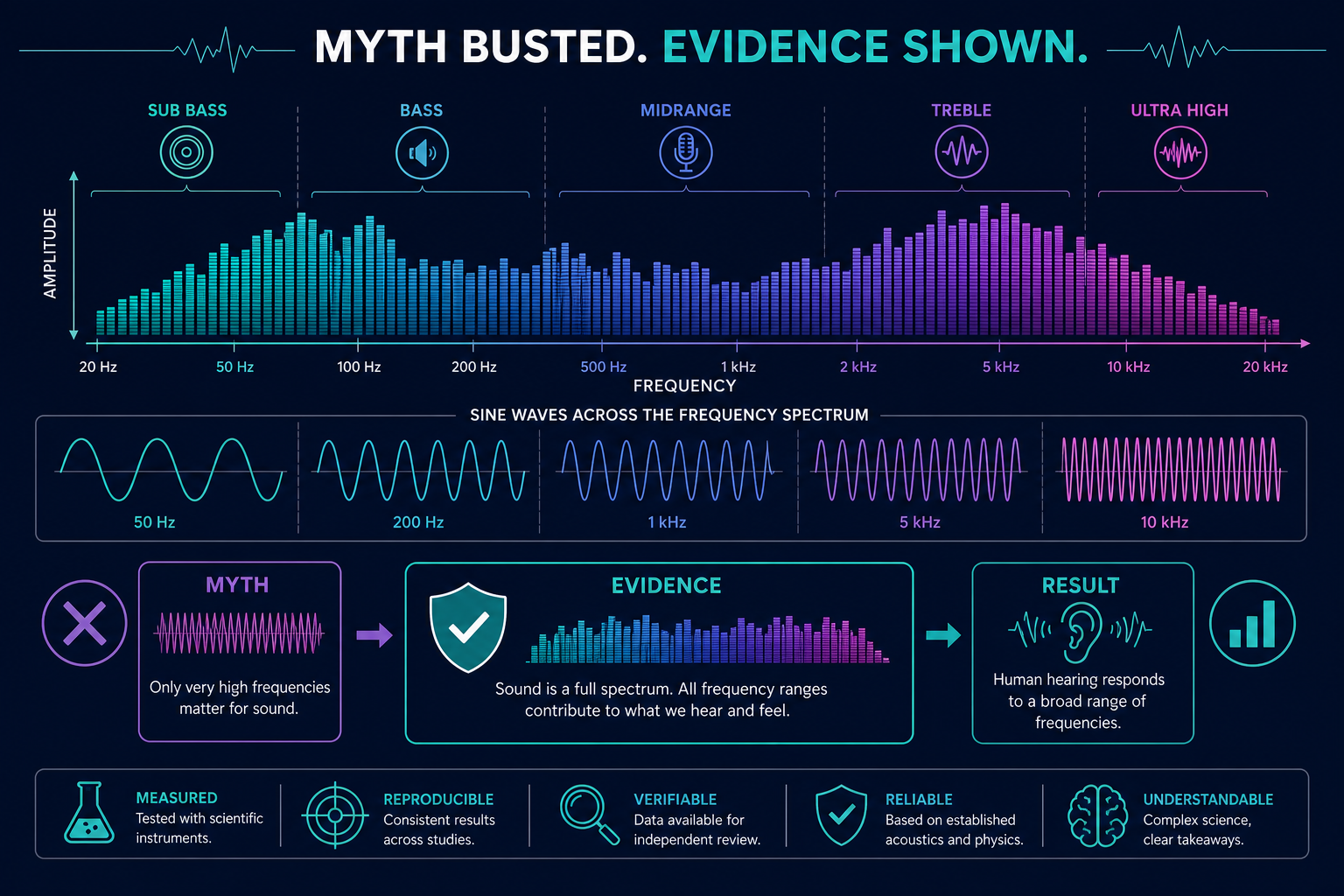
Fifth-century thinkers linked beautiful intervals to simple ratios — an octave as 2:1, a perfect fifth as 3:2. Pythagorean harmonics treated those relationships as evidence that audible order mirrored cosmic order.[2][3] That is early psychoacoustics, not frequency mysticism: they measured string lengths and heard what the ear accepts as stable.
Later writers extended the idea to health indirectly. If the cosmos is proportion, then disproportion — in diet, politics, or daily rhythm — might be restored by reintroducing proportion through music. The leap from ratio to remedy was philosophical; clinical trials were two millennia away. Still, the design insight survives: consonance signals predictability, and predictability lowers vigilance.[20]
Apollo’s double role: plague and lyre
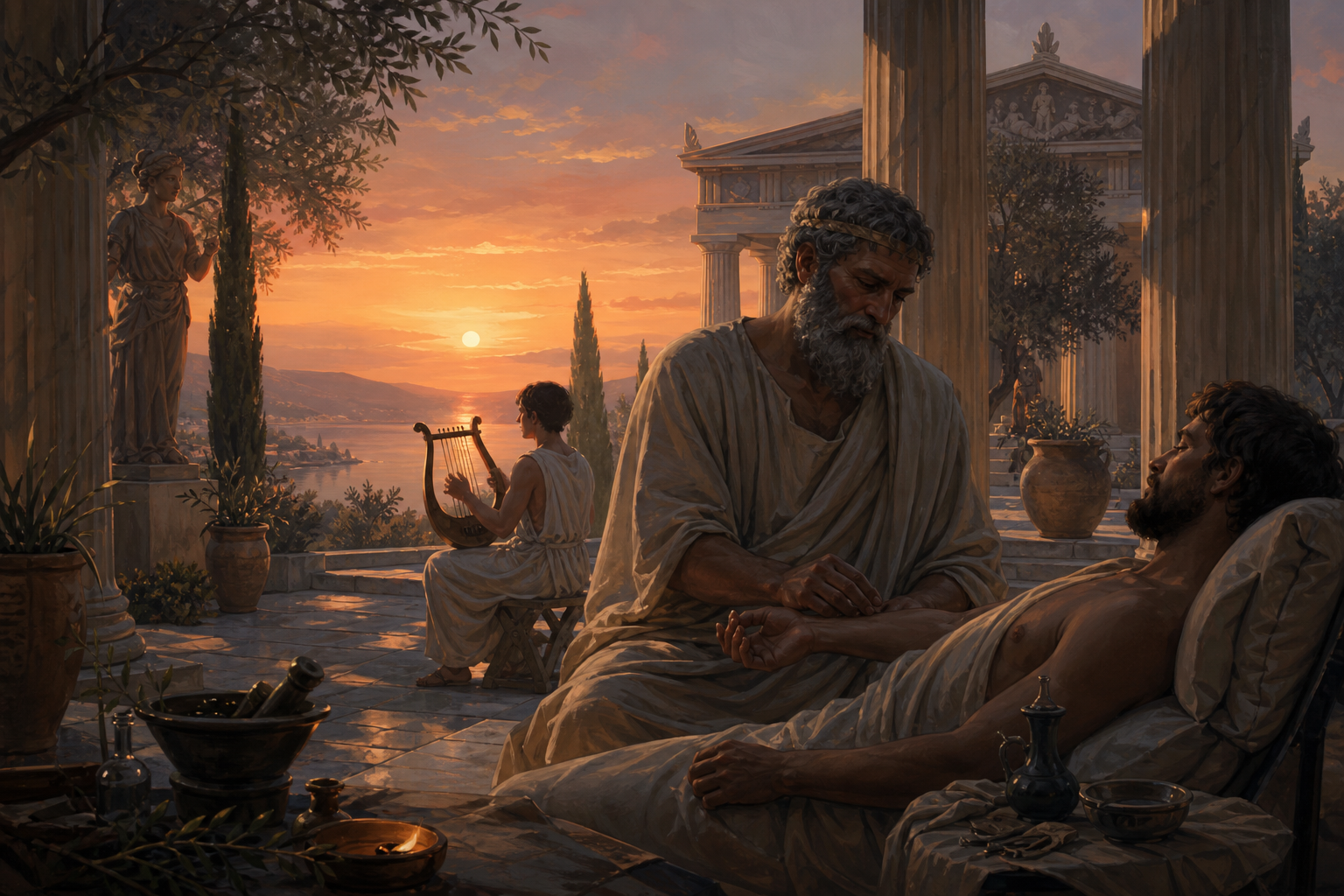
Homeric poetry already joins healing and performance in one god. Apollo sends plague and lifts it; he leads the Muses.[12] That pairing matters for historians: Greek “sound medicine” rarely isolated acoustics from divine narrative. A modern ICU playlist cannot replicate that frame — and should not pretend to.[1]
Athenian drama after plague years used choral song to process collective trauma; Mitchell-Boyask reads performance as civic hygiene as much as entertainment.[13] Again, context is half the dose: public rhythm, shared breath, predictable meter.
Asclepian sanctuaries — sleep, dreams, and the aulos
Healing sanctuaries to Asclepius spread across the Greek world. Epidaurus, Kos, and Pergamon combined ritual purification, animal sacrifice, and incubation: the patient slept in an abaton, hoping for a dream directive from the god.[6][7][11]
Music sat inside the ritual frame. Priests sang paian hymns; aulos players accompanied processions. Pausanias describes Epidaurus as a place where sight and hearing were curated — theatre, spring water, stone acoustics.[11] Rocconi’s survey of sanctuary music warns against retrofitting Spotify frequencies onto these rites; the mechanism was relational, spatial, and sacred.[6]
What transfers to contemporary design without cultural theft:
- Controlled place — low surprise, clear boundaries.
- Altered consciousness — sleep or deep rest as therapeutic window.
- Intentional timbre — reeds and lyres chosen for affect, not background.
Ulrich’s twentieth-century window-view recovery study and Alvarsson’s nature-sound autonomic recovery work rhyme with sanctuary logic: environment shapes physiology when the mind feels held.[19][20] That is analogy, not proof that Asclepius validates an app.
Plato’s Republic — modes as moral technology
Plato famously restricted musical modes in his ideal city, fearing certain scales would soften or inflame character.[4] In the Timaeus, cosmic soul resonates with mathematical harmony.[5] Murphy notes the tension: Plato both distrusted music’s power and relied on it to educate guardians.
For modern readers, the takeaway is psychological, not magical: timbre and tempo carry ethical weight in culture. War drums and lullabies are not interchangeable. Hospital waiting rooms that blast chaotic television violate Platonic intuition even if Plato never saw a flat screen.
Aristoxenus, Galen, and the body-ear link
Aristoxenus trained musicians to hear intervals through ear and judgment, not only mathematics — an early recognition that perception is embodied.[8][9] Galen later mapped soul faculties onto bodily humours; music appears as regimen adjunct, alongside diet and exercise, not as standalone surgery.[10] Roman physicians inherited Greek categories; the Empire spread bath-house acoustics and theatre culture without standardising clinical music protocols across provinces — diversity mattered then as now.
That hierarchy still makes clinical sense. Cochrane reviews find real but modest benefits for music interventions in anxiety and depression — adjunctive, not curative.[17] Neurologic music therapy’s structured gait protocols show rhythm can entrain motor circuits when a trained therapist sets goals.[18] None of that equals “play any Greek mode and heal.”
The aulos and the theatre — performance as public health
Greek theatres were acoustic instruments — stone seats, circular orchestras, resonant skene. Healing sanctuaries borrowed that spatial intelligence: processions audible before visible, building anticipation and collective rhythm.[8][11] Modern hospital atria sometimes pipe piano music without designing reflection paths — beauty without Nightingale’s functional quiet elsewhere.
West’s survey of ancient Greek music warns against romanticising incomplete scores — we know modes and ratios more than exact melodies. Reconstruction projects stay scholarly; wellness brands fill gaps with fiction.[8]
What Hippocratic medicine did not claim
Hippocratic texts emphasise diet, rest, climate, and observation — music appears more prominently in philosophical and cult contexts than in every surgical case record. Galen’s later synthesis integrated music into regimen for select conditions, always subordinate to humoral balance and surgery when needed.[10] That ordering still applies: environment supports; acute care intervenes.
Greek practice vs modern marketing
| Ancient Greek frame | Common modern claim | Evidence-aligned read |
|---|---|---|
| Ratio and consonance as cosmic order[2] | “528 Hz repairs DNA” | Consonance aids predictability; no single magic frequency[15] |
| Sanctuary sleep + ritual music[6] | “Sleep playlist cures insomnia” | Environment supports rest; disorder needs clinical care[17] |
| Mode affects character (Plato)[4] | “One scale fixes anxiety” | Tempo/timbre modulate arousal; individual taste varies[20] |
| Music as divine gift (Apollo)[12] | “Ancient secret frequencies unlocked” | History is not a product license[16] |
Reading the corpus responsibly
Classicists caution that our score record for ancient Greek music is fragmentary — notation on stone and papyrus, not MIDI files. Re-enactments at Epidaurus festivals stay artistic interpretation. When Sound Bubbles or any product cites “Greek harmony,” honesty means borrowing design values — proportion, space, ritual pacing — not selling reconstructed modes as clinical protocols.[8][15]
Bradt’s Cochrane work and Thaut’s NMT handbook represent what modern verification looks like: registered trials, effect sizes, adverse event tables. Nightingale’s ward observations anticipate actigraphy — narrative precision awaiting statistics. The through-line is attention to environment, not secret frequencies.[17][18][19]
If you visit Greece today, support archaeological conservation and local cultural institutions rather than buying trinkets labelled “Asclepius Hz.” History teaches intent; it does not license product claims.[16] Museums at Epidaurus and Athens contextualise instruments without prescribing modern treatment — the right boundary for curious listeners.
Listening with Greek design in mind — Sound Bubbles
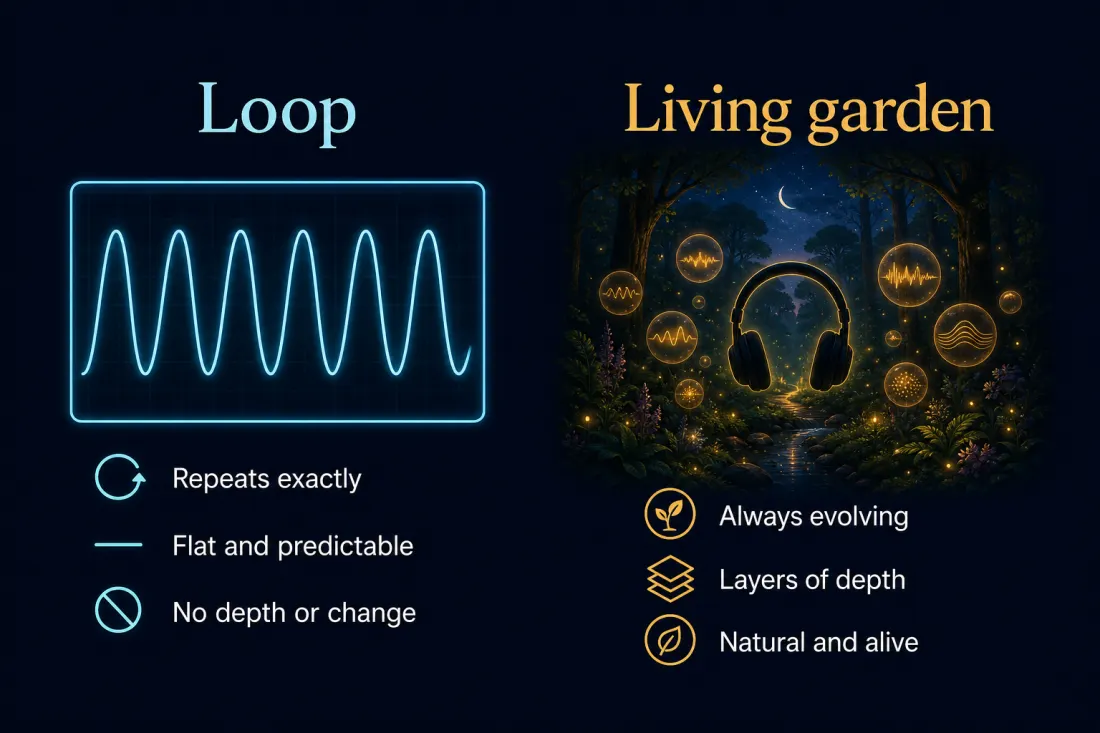
If you want to feel sanctuary logic without cosplaying Epidaurus: open Temple Organism or a sparse meditation garden. Keep bells distant, brown bed soft, speech absent. Use TimeLine Drift so the scene breathes like an outdoor theatre at dusk — slow change, no loop seam. That mirrors sanctuary acoustics more honestly than a “healing frequency” label.
Sound Bubbles is a companion environment tool — movable bubbles, Falloff for distance, easy mute. It does not diagnose, incubate dreams, or replace music therapy.[16]
Limits
Ancient practice does not prove present claims. Greek medicine blended religion and observation; we should not strip sanctuaries for branding. If you need treatment for anxiety, sleep disorder, or movement rehabilitation, seek licensed care — not a longer loop dressed in togas.[15][17][18]
How this article was researched
We combine first-hand experience placing and tuning Sound Bubbles gardens with citations from peer-reviewed journals, reviews, and institutional pages (including NIH/NCBI, sleep and hearing literature, acoustics, and attention research). Where evidence is mixed or early, we say so. On wellbeing topics we stay cautious: these are companion soundscapes, not cures.
References
Sources cited in this article. Prefer primary literature and institutional guidance; Sound Bubbles is not a medical device and these citations do not imply clinical endorsement.
- (2000). Music as medicine: the history of music therapy since antiquity. Ashgate.
- (2007). Scientific method in Pythagorean harmonics. Cambridge University Press.
- (2014). Pythagoras — Stanford Encyclopedia of Philosophy. Stanford Encyclopedia of Philosophy.
- (~380 BCE). Republic — musical modes and education (transl.). Classical text.
- (~360 BCE). Timaeus — cosmic harmony and soul. Classical text.
- (2018). Music in ancient Greek healing sanctuaries. Greek and Roman Musical Studies.
- (1899). Incubation and dream healing in antiquity. Classical archaeology.
- (1992). Ancient Greek music. Oxford University Press.
- (~4th c. BCE). Elementa harmonica — ear training and musical perception. Classical text.
- (~170 CE). On the doctrines of Hippocrates and Plato — soul and body. Classical medicine.
- (~150 CE). Description of Greece — Epidaurus sanctuary. Classical travelogue.
- (~8th c. BCE). Iliad — Apollo as healer and musician. Epic poetry.
- (2008). Plague and the Athenian imagination: drama, cult, and civic identity. University of Michigan Press.
- (2024). Sound and music based interventions — evidence overview. NIH.
- (2019). General wellness policy for low-risk devices. U.S. FDA.
- (2021). Music interventions for anxiety and depression. Cochrane Database of Systematic Reviews.
- (2015). Neurologic music therapy in sensorimotor rehabilitation. Oxford Handbook of Neurologic Music Therapy.
- (1984). View through a window may influence recovery from surgery. Science. doi:10.1126/science.6143400
- (2010). Stress recovery during exposure to nature sound and environmental noise. IJERPH. doi:10.3390/ijerph7031036